Anaerobic digestion
Anaerobic digestion (AD) is a natural process that uses microorganisms to break down organic waste—such as food scraps, crops and agricultural by-products—in the absence of oxygen.
The result is renewable energy in the form of biogas, a nutrient-rich fertiliser and captured carbon dioxide that would otherwise be released into the atmosphere.
How it works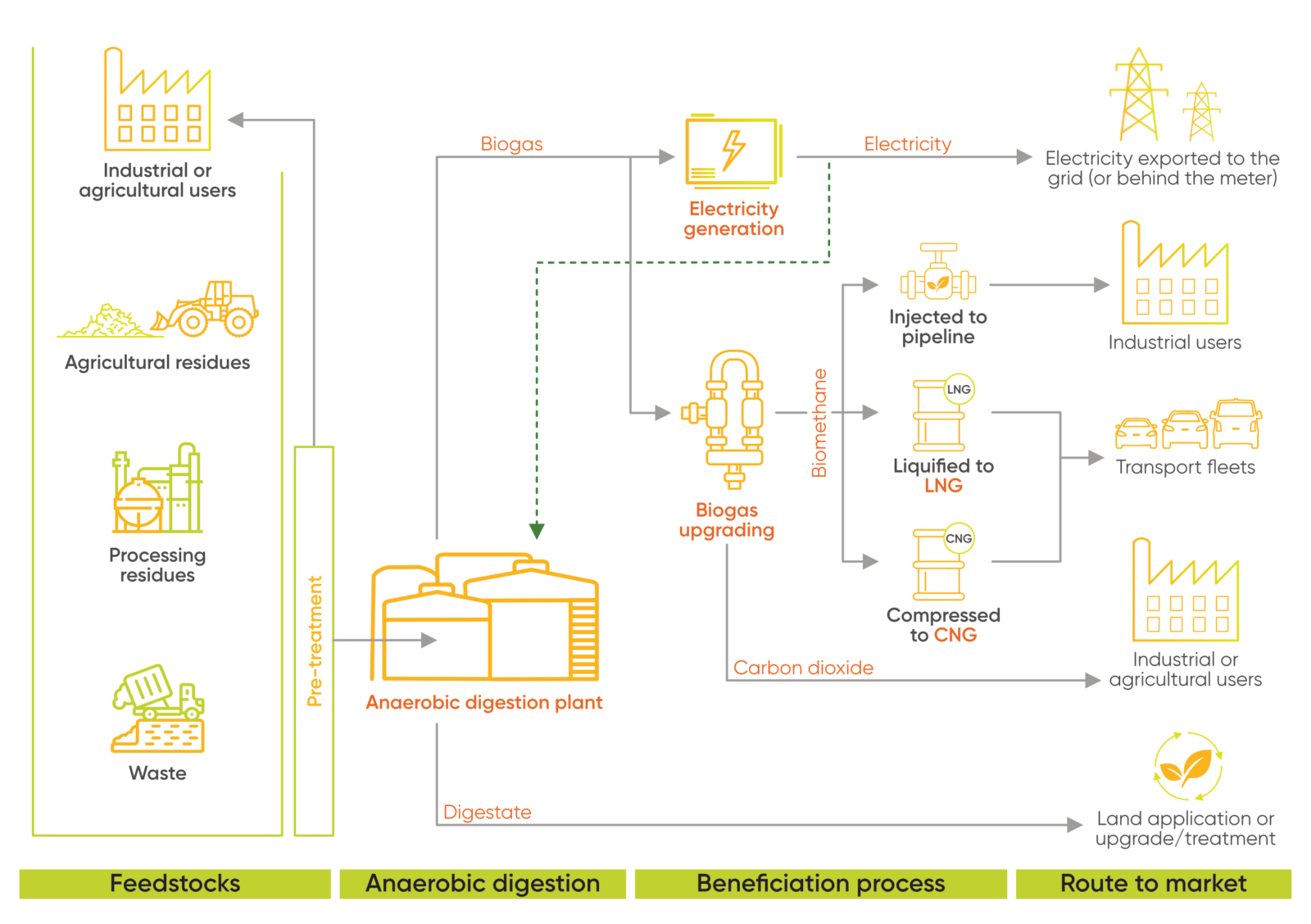
Collection: Organic material is delivered to the AD facility.
Digestion: In sealed tanks, microorganisms break down the material, producing biogas (mainly methane and CO2).
Energy generation: The biogas is captured and used to generate clean, renewable electricity and heat.
By-products: Remaining material is processed into fertiliser for agriculture, while captured CO2 can be used in food-grade products or stored safely.
Why is AD important?
- Reduces greenhouse gas emissions.
- Diverts waste from landfill.
- Supports the circular economy by turning waste into valuable products.
- Helps achieve national and global net zero targets.
EDL and AD
The acquisition of GWE Biogas is EDL’s first step into anaerobic digestion. It complements our existing landfill gas, wind, solar, hybrid and energy storage capabilities. Together, these technologies strengthen our vision to be the leading global producer of sustainable distributed energy.